
3 articles
Cyberstorage Explainers
Plain-language explanations of the Cyberstorage category and the architecture behind it: what it is, how storage-layer defense works, and where it differs from NAS and backup.
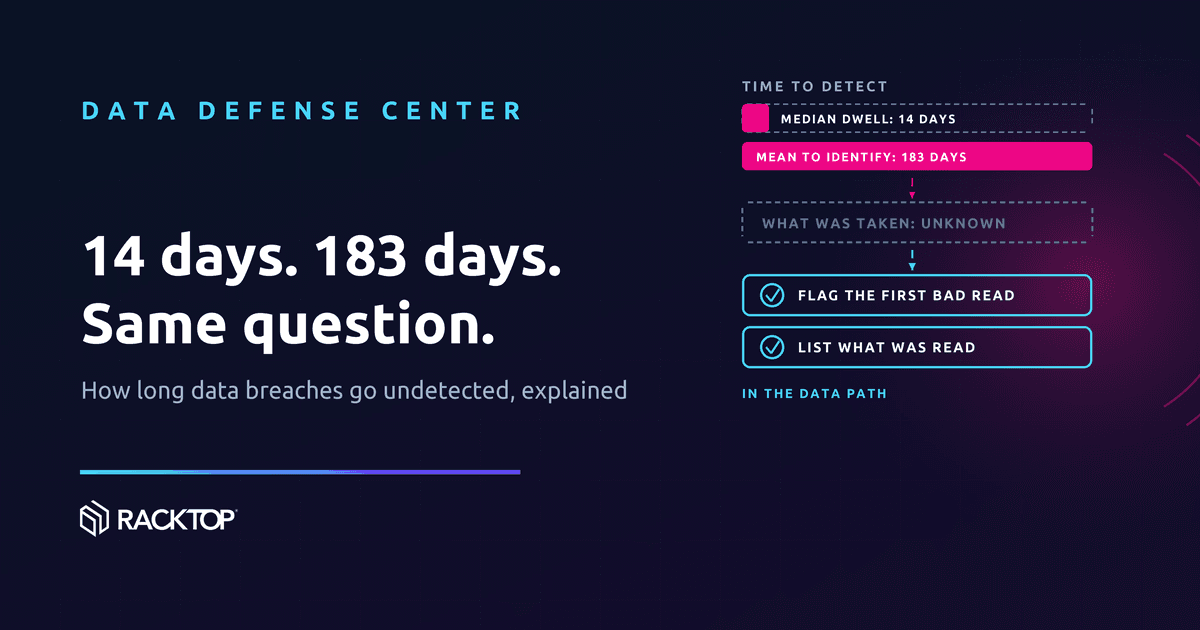
How long do data breaches go undetected? What dwell time measures, and what it leaves out
Mandiant puts the median dwell time at 14 days. IBM puts the average time to identify a breach at 183. Both are right, and neither says how long it takes to learn what an attacker took.
What Cyberstorage is, and why it exists
Cyberstorage builds security and recovery into the data storage layer itself. Here is what that means, the thirty-year assumption that made the category necessary, why Gartner named it in 2021, and how it differs from backup and traditional NAS.
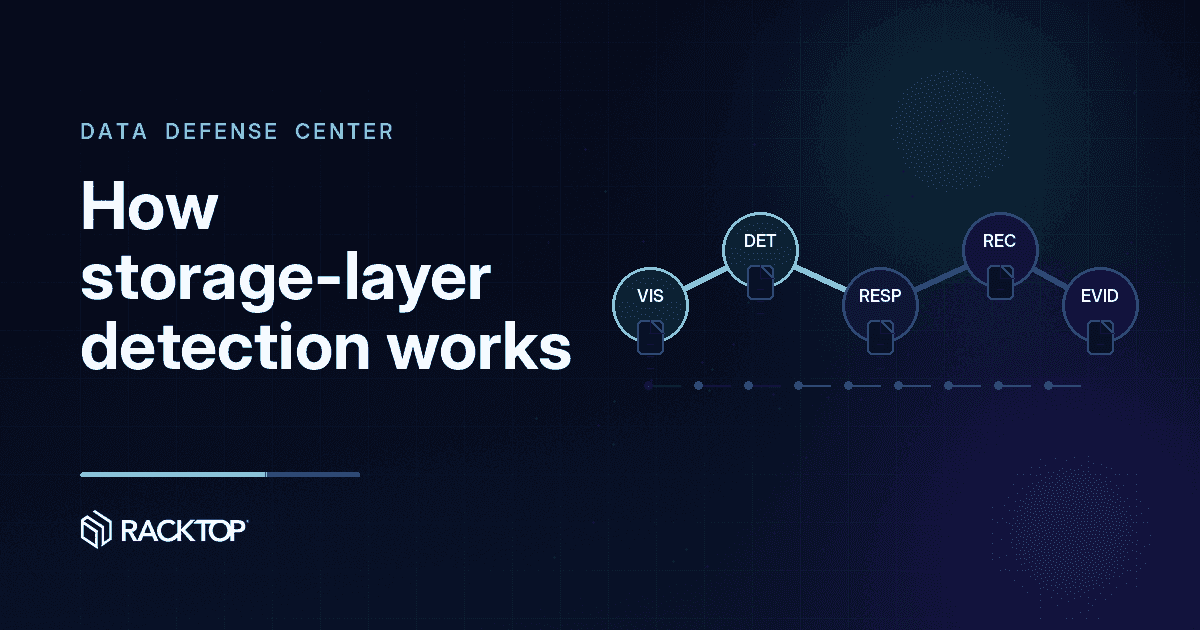
Ransomware protection at the storage layer: how it actually works
What real ransomware protection looks like at the layer attacks actually touch: the visibility, detection, policy, response, recovery, and evidence chain, explained link by link.
See data-layer defense in your environment
In a 30-minute demo we’ll show Active Defense stopping an attack inline, immutable recovery, and surgical rollback — mapped to your data and your threats.